


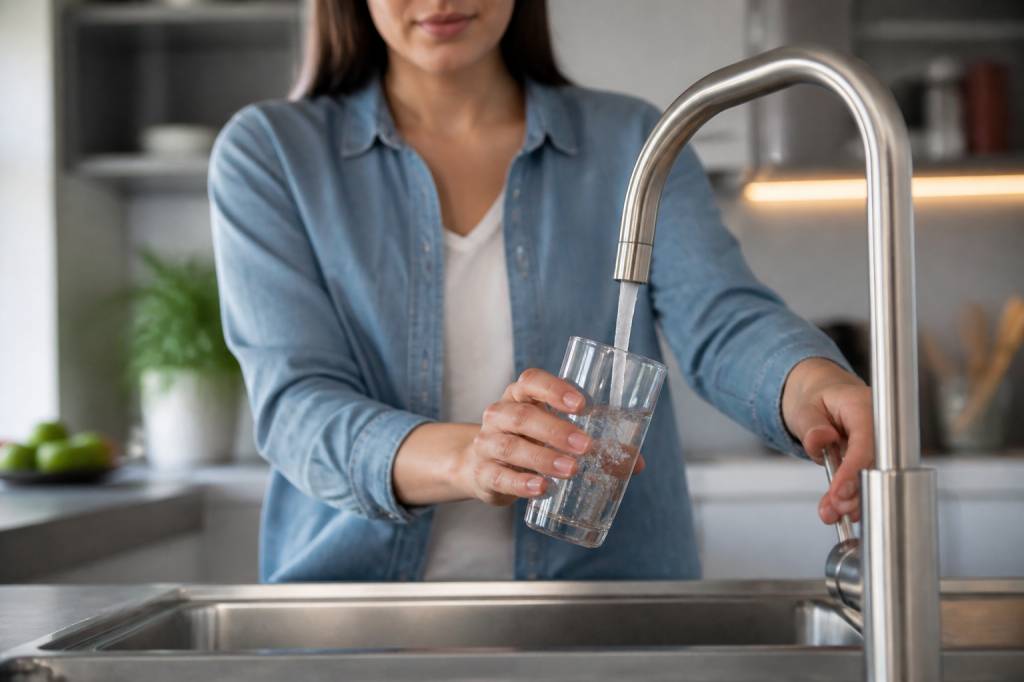
If you’ve ever caught a “swimming pool” smell from tap water, you’ve probably wondered what’s actually in it. Two of the most common disinfectants in municipal water systems are chlorine and chloramines, and while they share the same job—helping make water safer to drink—they don’t behave the same way once they reach your home. That difference matters a lot if you use a water filter, care about taste, or want better water for your family, pets, or plants.
At Oasis Water Purification, we often see people assume chlorine and chloramines are basically the same thing. Close, but not quite. Think of them as two different tools used for the same purpose. One is faster and easier to remove. The other hangs around longer and can be more stubborn than a toddler refusing bedtime.
In this article, we’ll break down what chlorine and chloramines are, how they affect your water, and which filtration methods actually work for each one.
What chlorine does in drinking water
Chlorine has been used for decades to disinfect drinking water. Its main role is to kill harmful microorganisms like bacteria and viruses as water travels through treatment systems and pipes. Without it, water safety would be much harder to maintain, especially in large distribution networks.
The upside? Chlorine is effective, relatively inexpensive, and easy for water utilities to use. The downside? It can leave behind a noticeable taste and odor that many people dislike. If your tap water smells like a public pool, chlorine is often the reason.
Chlorine can also react with natural organic matter in water and form disinfection byproducts. These are tightly regulated, but they’re one reason many utilities have looked for alternatives or supplements to chlorine over time.
What chloramines are and why utilities use them
Chloramines are disinfectants formed when chlorine combines with ammonia. They are also used by water systems to keep water safe, but they behave differently from free chlorine.
Utilities often choose chloramines because they are more stable and last longer in distribution systems. That longer-lasting protection can be useful when water has to travel far from the treatment plant to your faucet. Chloramines also tend to produce fewer of some chlorinated byproducts compared with chlorine alone.
Sounds like chloramines are the upgrade, right? Not so fast. Their stability is great for utilities, but it makes them more difficult to remove at home. They can also affect taste, odor, and performance in certain filtration systems.
Chlorine vs chloramines: the key differences
Both disinfect water, but they are not interchangeable from a consumer point of view. Here’s the practical difference:
- Chlorine is more reactive and easier to remove.
- Chloramines are more stable and harder to remove.
- Chlorine often creates a stronger taste and smell.
- Chloramines usually create a milder odor, but can still affect water quality and filtration needs.
- Some filters handle chlorine well but do very little against chloramines.
If you’re only focused on “Does my water look clear?”, the answer may be yes for both. But if you care about taste, odor, aquariums, brewing coffee, or the health of certain filtration membranes, the difference becomes very important.
How these disinfectants affect taste and odor
One of the most common reasons people look into water purification is simple: their water tastes off. Chlorine usually gives a sharper chemical taste and smell. Chloramines are often described as flatter, duller, or slightly medicinal.
That difference might seem minor until you notice it in everyday life. For example, tea brewed with chlorinated water can taste thin or harsh. Coffee may lose some of its balance. Even a glass of water can feel less refreshing if you’re sensitive to the odor.
And yes, some people are more sensitive than others. One person may not notice anything, while another immediately says, “Why does this taste like a municipal office?” Water perception is personal, but if enough people in a household complain, it’s usually worth investigating.
Which filtration methods remove chlorine?
Chlorine is relatively easy to reduce with the right filter. This is good news because many common filtration systems do the job well.
Effective options for chlorine removal often include:
- Activated carbon filters
- Carbon block filters
- Some whole-house filtration systems with carbon media
- Reverse osmosis systems, usually with carbon pre-filtration
Activated carbon works by adsorbing chlorine and related compounds as water passes through it. Carbon block filters often perform even better because they provide more contact time and a denser filtration structure.
If your water is chlorinated, you may see a quick improvement in taste and odor with even a basic pitcher filter. That said, the quality of the filter matters. Not all carbon filters are equal, and performance depends on contact time, filter size, and how much water the filter is meant to process.
Which filtration methods remove chloramines?
This is where things get more interesting. Chloramines are harder to remove because they are more stable than chlorine. A simple pitcher filter that improves chlorine taste may barely touch chloramines.
To reduce chloramines effectively, you typically need stronger filtration media or a system specifically designed for chloramine removal.
Common options include:
- Catalytic carbon filters
- Specialized whole-house filters rated for chloramine reduction
- Some advanced reverse osmosis systems with chloramine-specific pre-filtration
Catalytic carbon is especially useful because it speeds up the chemical breakdown of chloramines. In other words, it helps the filter do the job that regular carbon finds difficult.
If your utility uses chloramines, don’t assume every carbon filter will solve the problem. This is one of the biggest mistakes homeowners make. They buy a filter that says “reduces chlorine taste and odor,” then wonder why the water still tastes unusual. The filter isn’t broken—it was just not built for chloramines.
How to tell whether your water has chlorine or chloramines
Before buying a filter, it helps to know what your water utility uses. The easiest place to start is your local water quality report, sometimes called a Consumer Confidence Report. Utilities usually disclose the disinfectant they use.
You can also call your water provider directly and ask. It’s a simple question, and they’re used to hearing it. Something like, “Does our municipal water use free chlorine or chloramines?” is usually enough.
There are also test kits, but for disinfectants in tap water, the utility report is often the most reliable and easiest first step.
If you use well water, the situation is different. Private wells typically are not disinfected with chlorine or chloramines unless a homeowner has installed a treatment system that adds them. In that case, your filtration needs depend on your own setup, not a municipal supply.
Why this matters for reverse osmosis systems
Reverse osmosis, or RO, is one of the most popular purification methods for better-tasting drinking water. It’s excellent at removing many dissolved contaminants, but it has one important weakness: the membrane can be damaged by chlorine.
That’s why most RO systems use carbon pre-filters to protect the membrane. If your water contains chlorine, this setup usually works well. If your water contains chloramines, you need an RO system with chloramine-capable pre-filtration, often using catalytic carbon.
This detail matters because an RO membrane can be one of the more expensive parts of the system. Feeding it untreated chlorinated water is like sending a paper umbrella into a thunderstorm and hoping for the best.
If you already own an RO system and your utility switches from chlorine to chloramines, your filtration performance may change without you realizing it. A sudden taste issue or faster membrane wear can be a clue that your pre-filtration is no longer enough.
Whole-house filtration and shower water
Most people focus on drinking water, but disinfectants affect more than what you pour into a glass. If your water contains chlorine, you may notice it in showers, laundry, and even the smell of steam from a hot shower.
Whole-house carbon filtration can reduce chlorine before it reaches faucets, showers, and appliances. This may improve bathing comfort and reduce that “treated water” smell throughout the home.
For chloramines, whole-house treatment requires a system specifically designed for that purpose. This usually means larger catalytic carbon systems or other advanced media with enough contact time to work effectively.
Why does this matter? Because hot water can make odors more noticeable, and shower exposure means you’re inhaling and contacting treated water more often than you think. If your skin or hair feels better with filtered water, it may be because you’ve reduced the disinfectant load, not just improved taste.
What about aquariums, plants, and brewing?
Chlorine and chloramines are not just a drinking water issue. They can also affect aquariums, indoor plants, fermentation, and beverages.
For aquariums, chloramines are especially important because they can harm fish and beneficial bacteria. Many aquarium hobbyists use water conditioners that neutralize both chlorine and chloramines. Standard filtration alone is not always enough.
For brewing coffee, tea, and beer, disinfectants can influence flavor and consistency. Chlorine can create off-flavors, while chloramines may leave subtle but stubborn taste issues. Serious home brewers often pay close attention to water treatment for this reason alone.
Plants can also react differently depending on species and water chemistry. Some are resilient, while others are surprisingly sensitive. If a plant seems unhappy for no obvious reason, water quality may be part of the story.
Choosing the right filter for your home
If you’re shopping for a water filter, the smartest move is to match the system to the disinfectant in your water.
Use this quick guide:
- If your water contains chlorine, look for activated carbon or carbon block filtration.
- If your water contains chloramines, look for catalytic carbon or systems specifically rated for chloramine reduction.
- If you use reverse osmosis, make sure the pre-filtration is designed for your disinfectant type.
- If you want whole-house treatment, check that the system is sized and certified for disinfectant removal.
Also pay attention to certifications and performance claims. A filter that reduces “chlorine taste and odor” is not automatically a chloramine solution. The label matters more than the marketing language.
Another practical detail: flow rate and filter life. A highly effective filter that clogs too fast or slows your water to a trickle may not be ideal for daily use. The best system is the one that fits your water, your household size, and your habits.
Common mistakes people make
There are a few repeat offenders when it comes to disinfectant filtration:
- Assuming all carbon filters remove chloramines
- Buying a filter without checking the local water report
- Using an RO system without proper chlorine or chloramine protection
- Ignoring filter replacement schedules
- Expecting taste improvement to mean full disinfectant removal
That last one is especially sneaky. Better taste is a nice sign, but it doesn’t always tell the full story. A water filter can improve flavor while still leaving some chloramines behind. If removal is important for your use case, verify performance rather than relying on taste alone.
A simple way to think about it
If chlorine is the guest who arrives loudly and leaves early, chloramines are the one who stays for the whole party and somehow ends up on the couch at 1 a.m. Both are there to disinfect the water, but they require different strategies when it’s time to filter them out.
That’s why understanding your water source is the first step to better purification. Once you know whether your utility uses chlorine or chloramines, choosing the right filter becomes much easier—and much more effective.
For homeowners, the payoff is straightforward: cleaner-tasting water, better protection for sensitive equipment, and a filtration setup that actually does what it promises. And if your current filter hasn’t been delivering the results you expected, the disinfectant type in your water may be the missing piece.
When water tastes better, the whole household notices. Coffee improves. Ice cubes stop smelling like a lab experiment. Even plain water starts doing its job again: being refreshingly, unremarkably water.
And honestly, that’s usually the goal.