


Why hard water stains show up in the first place
If you’ve ever wiped down a faucet only to find a chalky white film staring back at you five minutes later, you’ve met hard water stains. These marks are caused by mineral buildup, mostly calcium and magnesium, left behind when water evaporates. Over time, those minerals cling to sinks, glass, shower doors, tiles, and fixtures, creating the stubborn residue many people mistake for dirt.
The frustrating part? The surface may be perfectly clean, but the mineral deposits make it look neglected. That’s why regular soap and water often fail. You need something that can gently loosen the buildup without scratching delicate finishes. This is where a baking soda paste earns its reputation as a simple, budget-friendly cleaning option.
Why baking soda works so well on mineral buildup
Baking soda is mildly abrasive, which means it can help lift deposits without being as harsh as scouring powders. It also has a naturally alkaline pH, which helps loosen grime and break down some of the residue stuck to surfaces. On its own, it won’t dissolve heavy limescale the way stronger acidic cleaners can, but it does an excellent job of softening and lifting lighter to moderate buildup.
Think of it like a gentle reset button. If your faucet has just started showing cloudy spots, or your glass shower door has a hazy ring around the handle, baking soda paste can often restore the shine with minimal effort. For many households, it’s the sweet spot between “too weak to work” and “too aggressive for regular use.”
And if you already care about water quality in your home, this method fits neatly into a low-tox, practical cleaning routine. It keeps things simple, avoids unnecessary chemicals, and still delivers visible results.
How to make a baking soda paste
One of the best things about this method is that you probably already have everything you need in the kitchen. The paste is easy to customize depending on how thick or spreadable you want it.
- Mix 3 parts baking soda with 1 part water for a thick paste.
- Add a few drops of water at a time until it reaches a spreadable texture.
- For vertical surfaces, make it slightly thicker so it stays in place longer.
- For small spots, a pea-sized amount is often enough.
You can make the paste in a small bowl with a spoon, or even in your hand if you’re dealing with one sink or faucet. The goal is a texture similar to toothpaste: firm enough to cling, soft enough to spread.
Best surfaces for baking soda paste
Baking soda paste is especially useful on surfaces where hard water stains tend to build up slowly over time. It works well on many common household materials, but a careful approach always pays off.
- Stainless steel sinks
- Ceramic sinks and tubs
- Chrome faucets and fixtures
- Glass shower doors
- Tile and grout
- Plastic shower caddies and dispensers
If you’re unsure about a finish, test the paste on a small hidden area first. That’s especially important for natural stone, polished marble, brass, or specialty coatings. Baking soda is gentle, but even gentle cleaners can dull sensitive surfaces if used repeatedly or with too much pressure.
Step-by-step: how to remove hard water stains effectively
To get the best results, don’t just smear the paste on and hope for magic. A small process makes a big difference.
Start by rinsing the area with warm water to remove loose debris. This helps the paste work directly on the mineral buildup instead of getting blocked by dust or soap scum.
Apply the baking soda paste generously to the stained area. For vertical surfaces like shower glass or faucet necks, press it on rather than rubbing it off immediately. Let it sit for 10 to 15 minutes. For heavier stains, you can extend that to about 20 minutes.
Use a soft sponge, microfiber cloth, or non-scratch scrub pad to work the paste in gentle circular motions. The motion helps lift the residue while the paste provides light abrasion. If you’re working around faucet bases or tight edges, an old toothbrush can be useful for getting into crevices.
Rinse thoroughly with clean water. This part matters more than people think. Any leftover powder can dry into a white film and create the illusion that the stain is still there.
Dry the surface with a microfiber cloth. This helps prevent new water spots from forming and gives you a clear view of the result. Sometimes the difference is immediate; other times a second application is needed for stubborn buildup.
When to pair baking soda with another ingredient
For light to moderate mineral buildup, baking soda alone is often enough. But what about those stubborn, chalky deposits that have been sitting there since last month’s “I’ll deal with it later” moment?
In some cases, baking soda works even better when paired with vinegar or lemon juice. That said, there’s a nuance worth knowing: when baking soda and vinegar are mixed together, they fizz and neutralize each other quickly. That reaction can help loosen debris, but it doesn’t make the solution stronger in the way many cleaning myths suggest.
A better approach is often to use them in sequence, not as one all-powerful potion. For example:
- Apply vinegar to dissolve heavy mineral deposits.
- Let it sit briefly, then scrub with baking soda paste.
- Rinse thoroughly and dry the surface.
This can be especially helpful on glass, chrome, and shower doors. Lemon juice can also work as a mild natural acid, though it may leave a scent and should still be rinsed well.
If the buildup is very stubborn, you may need a dedicated descaling product. Baking soda is excellent for maintenance and moderate stains, but it has limits. Knowing those limits saves time and frustration.
Common mistakes that make hard water stains harder to remove
A few cleaning habits can accidentally make mineral buildup more stubborn or more noticeable. The good news is that these mistakes are easy to avoid once you know what to watch for.
- Using too much pressure and scratching the surface
- Letting paste dry completely before rinsing
- Skipping the rinse step and leaving residue behind
- Applying baking soda to delicate stone without testing first
- Cleaning once and forgetting to dry the area afterward
One of the biggest mistakes is assuming more scrubbing equals better results. Not always. Hard water stains respond better to patience than force. A short soak, a gentle scrub, and a good rinse are usually more effective than aggressive elbow grease.
How to remove hard water stains from specific areas
Different surfaces collect mineral buildup in different ways, so a slightly tailored method helps.
Faucets and showerheads
For chrome or stainless steel fixtures, apply the baking soda paste with a cloth and work around the base, spout, and handle joints. These areas often hide buildup in tiny rings and seams. If a showerhead has visible white crust around the nozzles, wrap it with a cloth coated in paste and let it sit before rinsing.
Glass shower doors
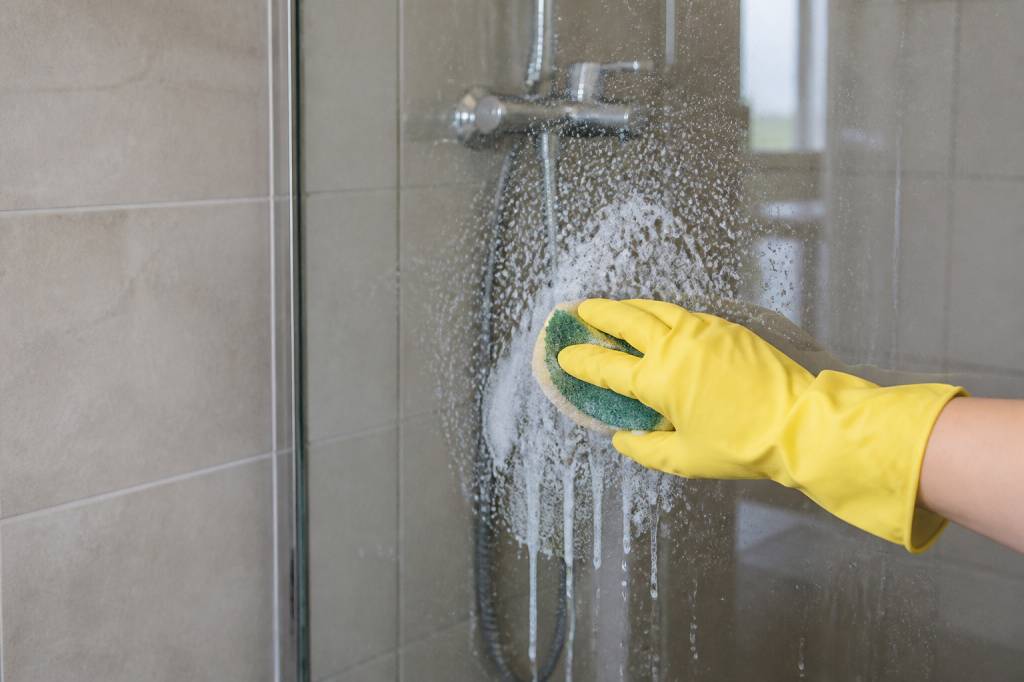
Glass is where hard water spots become impossible to ignore. Apply the paste in sections and use a microfiber cloth or non-scratch sponge. For better results, rinse, dry, and inspect the surface from an angle. Streaks often appear when the glass is wet but disappear once fully dried.
Bathroom sinks and tubs
Ceramic and porcelain can usually handle baking soda paste very well. Pay attention to the drain area, faucet base, and waterline along the tub. Those are the places mineral buildup tends to quietly accumulate until one day you notice the ring and wonder how long it has been there.
Tile and grout
For tiles, use a soft brush or sponge to work the paste into the stained areas. Grout can trap minerals more easily than smooth surfaces, so a little extra dwell time may help. Avoid metal brushes, which can damage grout and leave permanent marks.
How often should you clean hard water stains?
The answer depends on your water hardness, how often a surface gets wet, and how quickly you wipe it down after use. In homes with very hard water, weekly maintenance may be ideal for shower doors and faucets. For other areas, every two to four weeks may be enough.
If you already know your home has hard water, a little prevention goes a long way. Wiping down wet surfaces after use is one of the simplest habits you can build. It takes seconds, and it reduces the time minerals have to settle and bond to the surface.
How to keep mineral buildup from coming back
Removing hard water stains is satisfying. Preventing them from returning is even better. You don’t need a complicated routine to make that happen.
- Dry sinks, faucets, and shower doors after use
- Use a squeegee on glass shower doors
- Wipe fixtures weekly with a gentle cleaner
- Clean aerators and showerheads regularly
- Check for leaks or slow drips that leave constant mineral deposits
Another long-term strategy is addressing the water itself. If your water is hard, a water softener or appropriate filtration solution may reduce the amount of mineral residue left behind in the first place. That can save time on cleaning, extend the life of fixtures, and help your bathroom and kitchen stay looking fresher for longer.
Where water quality fits into the bigger picture
At Oasis Water Purification, the focus isn’t just on removing visible stains. It’s on understanding what hard water is doing throughout the home. Mineral buildup on sinks and glass is the part you can see, but hard water can also affect appliances, plumbing efficiency, and daily cleaning routines.
That’s why cleaning methods and water treatment solutions work best together. Baking soda paste is a practical tool for restoring surfaces, but it’s also a reminder that the water flowing through your home shapes your environment every day. If stains keep returning quickly, it may be worth looking beyond the cleaning cabinet and into the water supply itself.
Is baking soda paste safe for regular use?
For most household surfaces, yes, when used correctly. It’s a dependable option for routine stain removal and maintenance cleaning. The key is moderation. Use enough to loosen the buildup, but not so much that you leave grit behind or over-scrub delicate finishes.
If you’re cleaning frequently and notice that stains keep appearing faster than you can remove them, that’s often a sign the real issue is water hardness rather than cleaning technique. In other words, the stains may be telling you something useful.
Hard water doesn’t mean your home is dirty. It just means the water is carrying minerals that settle wherever they can. Baking soda paste helps you stay ahead of those deposits with a simple, low-cost method that fits naturally into a healthier home routine.
A practical habit worth keeping
There’s something satisfying about using a basic ingredient to solve a very common household problem. Baking soda paste won’t replace every specialty cleaner, but it absolutely deserves a place in your routine. It’s affordable, easy to make, and effective for many hard water stains when used with a little patience.
If you’re tired of cloudy faucets and chalky shower glass, start with the simple version: mix, apply, wait, scrub gently, rinse, and dry. Small steps can make a big difference, especially when mineral buildup has been quietly overstaying its welcome.
And if the stains keep coming back, don’t just clean harder. Look at the source. Better water quality can mean less buildup, less scrubbing, and a home that feels cleaner every day.