


If you’ve ever seen a label proudly claiming “artesian water,” you may have wondered what that actually means. Is it just a fancy name for bottled water? Is it naturally cleaner? Does it come from some magical underground fountain guarded by geology? Not quite—but the story is still pretty fascinating.
Artesian water is tied to a very specific underground setup, and understanding it helps make sense of where our water comes from, how it moves, and why some wells can bring water to the surface without a pump. For anyone interested in water quality, home water systems, or simply what’s flowing from the tap, it’s worth knowing the basics.
What artesian water means
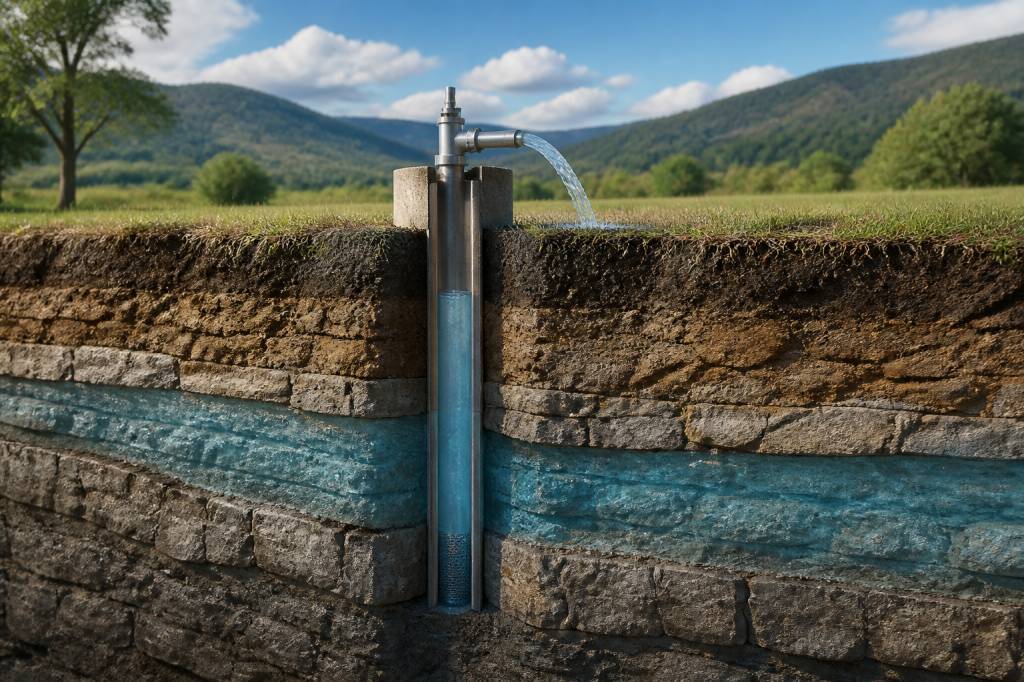
Artesian water comes from a confined aquifer, which is an underground layer of water-bearing rock or sediment trapped between layers of impermeable material, like clay or dense rock. Because that aquifer is under pressure, water can rise naturally when the aquifer is tapped by a well.
In simple terms: artesian water is groundwater under pressure. When the well is drilled into the confined aquifer, the pressure pushes the water upward. In some cases, it flows all the way to the surface on its own. That’s why artesian wells have long fascinated people—water that seems to “want” to come up without much help always feels a little impressive.
The word “artesian” comes from Artois, a region in France where such wells were historically used. So the name is geographic, not decorative. It refers to a real hydrogeological condition, not a marketing invention.
What makes artesian water different from regular groundwater
Most groundwater sits in an aquifer that is open to the surface somewhere. Rain and snowmelt seep down through soil and rock, replenishing the water table. In a confined aquifer, however, water is trapped beneath layers that don’t let it escape easily. This creates pressure.
That pressure is the big difference. In an unconfined aquifer, water is there, but not necessarily under enough pressure to rise on its own. In an artesian system, the water is squeezed by the surrounding geology, which changes how it behaves when accessed by a well.
Here’s an easy way to picture it: imagine a sealed, water-filled tube bent beneath layers of rock. If you poke a hole in it at the right spot, the water level rises. Sometimes it may even gush out. Nature, apparently, does enjoy a bit of drama.
How artesian wells work
An artesian well is drilled into a confined aquifer. The key is that the aquifer is under pressure because it is recharged at a higher elevation or through a different part of the system where water enters more easily. Gravity and geology do the rest.
When the well reaches the aquifer, the pressure causes the water to rise in the well shaft. If the pressure is strong enough, the water level in the well may climb above the top of the aquifer. If it rises above the ground surface, you have a flowing artesian well.
If the water rises but does not reach the surface, the well is still artesian; it just needs a pump to bring the water up. That’s an important distinction. Not all artesian wells are fountains in disguise.
Several factors influence how artesian wells work:
- Recharge area: Water must enter the aquifer somewhere, usually at a higher elevation.
- Confining layers: Impermeable rock or clay traps the water and allows pressure to build.
- Elevation difference: The greater the difference between recharge area and well location, the more pressure there may be.
- Well depth and placement: The well must be drilled into the confined aquifer, or the system won’t function as artesian.
That pressure is also why artesian wells can be incredibly productive. In the right geological conditions, they provide a steady, reliable supply of water with minimal mechanical assistance.
Where artesian water comes from
Artesian water often starts as rain or snowmelt in a distant recharge zone. This water slowly filters through soil and porous rock until it reaches the confined aquifer. Depending on the geology, that journey may take years, decades, or even longer.
Because of this underground travel, artesian water is sometimes described as naturally filtered. That’s partly true, but it’s not a guarantee of purity. Natural filtration through rock can reduce some impurities, but it does not automatically remove everything. Minerals, dissolved gases, and contaminants from surrounding geology can still be present.
In other words, “underground” does not equal “perfect.” Water quality depends on the full environment it passes through, plus how the well is constructed and maintained.
Is artesian water always better
Not necessarily. It’s easy to assume artesian water is superior because it sounds pristine and old-fashioned in a good way. But the truth is more nuanced.
Artesian water can be high quality, mineral-rich, and pleasant tasting. It may also have a stable composition because confined aquifers are less directly exposed to surface contaminants than shallow groundwater sources. However, water quality still varies widely.
Some artesian water contains beneficial minerals like calcium and magnesium, which can affect taste and hardness. Others may have elevated levels of iron, sulfur, or naturally occurring substances such as arsenic, depending on local geology. So while artesian water may be a great source, it still deserves proper testing.
For homeowners, that matters. If your property relies on a well, the source type alone should not replace routine water testing and treatment planning.
Artesian wells versus other well types
Not all wells are created equal, and artesian wells are only one category in the broader world of groundwater access.
Shallow wells tap water close to the surface. They are often less expensive to drill but can be more vulnerable to contamination and seasonal changes.
Deep wells reach farther down and may access more protected aquifers, but they still need pumps and do not necessarily involve pressure-driven flow.
Artesian wells tap confined aquifers under pressure. In some cases, they can bring water upward without pumping, which is a practical advantage and a geological curiosity rolled into one.
The main takeaway? Artesian wells are defined by pressure, not just depth. A well can be deep and not artesian, or artesian and not especially deep. Geology is rarely interested in making things simple for us.
Why artesian water matters for home water quality
For a blog focused on water purification, artesian water is relevant because it reminds us that source water quality starts long before any filter is installed. The better you understand the source, the better you can choose the right treatment.
Artesian water may already have lower exposure to surface runoff, pesticides, or bacteria than some shallow sources. That’s encouraging. But it can still carry dissolved minerals, hardness, and naturally occurring contaminants that affect taste, plumbing, and health concerns.
That means even a “good” source can benefit from filtration or conditioning. For example:
- Hard water issues: Minerals from artesian sources may cause scale buildup in kettles, pipes, and water heaters.
- Taste and odor: Iron or sulfur can create noticeable taste or smell problems.
- Contaminant concerns: Natural or regional contaminants may still require filtration or specialized treatment.
- Sediment protection: Even groundwater can carry fine particles that clog fixtures or appliances.
In short, if you have artesian water, don’t skip the basics. Test first, then treat based on the results.
Can artesian water be bottled
Yes, artesian water is sometimes bottled and sold under that label. But bottled artesian water should not be confused with all spring water or groundwater products. The term has a specific meaning: the water comes from a confined aquifer and is under natural pressure.
That said, bottled water labels can be confusing. “Artesian” tells you something about the source, but not everything about the treatment process, mineral content, or safety standards. Bottled water may still be filtered, disinfected, or processed before sale.
If you’ve ever bought a bottle because it sounded more “natural,” you’re not alone. Marketing knows exactly which words make water sound poetic. But from a practical perspective, the source and treatment methods matter more than the label’s mood.
What to know if your home uses artesian well water
If your home is supplied by an artesian well, you’re in a good position to benefit from a naturally pressurized source. Still, there are a few things worth keeping in mind.
First, have the water tested regularly. A reliable test can check for bacteria, hardness, pH, iron, manganese, nitrates, and other local concerns.
Second, inspect the well system. Even strong natural pressure won’t protect a poorly sealed wellhead or damaged casing from contamination.
Third, match treatment to the problem. If your artesian water is hard, a water softener may help. If there’s sediment, a sediment filter may be the right first step. If you’re worried about contaminants, a more advanced filtration system may be necessary.
Common treatment options for artesian well water include:
- Sediment filters to capture particles
- Activated carbon filters to improve taste and odor
- Water softeners for mineral-heavy water
- Iron filters for staining or metallic taste
- UV purification systems for microbial protection where needed
Because every well is different, there is no one-size-fits-all answer. That’s why testing and system design matter more than assumptions.
How artesian wells are maintained
An artesian well may be powered by natural pressure, but that does not mean it can be ignored. Like any water source, it needs oversight.
Maintenance usually includes checking the wellhead, inspecting for cracks or leaks, monitoring flow rate, and making sure surface water cannot enter the system. If the water is flowing artesian, excess discharge should also be managed carefully to prevent erosion or waste.
In some locations, artesian wells have been flowing for decades or longer, but the surrounding geology and pressure conditions can change over time. Water use in the recharge area, seasonal shifts, and development can all affect the system.
That’s one more reason to view artesian water as a living system, not a static feature. The underground world is always moving, even when we can’t see it.
Why people are still fascinated by artesian water
Part of the appeal of artesian water is the idea that nature is doing the work for us. No pump. No visible machinery. Just water rising because pressure and geology align in the right way.
There’s also a sense of purity attached to the term, even if that purity is more symbolic than guaranteed. Artesian water feels old, deep, and untouched. In a world full of complex systems, that simplicity is appealing.
But the real value lies in understanding what the term actually means. Once you know the geology behind artesian wells, the label becomes less mysterious and more useful. You can ask better questions about source quality, treatment, and reliability.
And when it comes to water in the home, better questions lead to better decisions.
A simple way to think about artesian water
If you want the shortest possible definition, here it is: artesian water is groundwater from a confined aquifer that is under pressure.
If you want the practical version: artesian wells can sometimes bring water to the surface naturally, but the water still needs to be tested and possibly treated before it’s truly ready for everyday use.
That’s the heart of it. Artesian water is not just a romantic label or a mysterious underground treasure. It’s a specific hydrogeological phenomenon with real benefits and real considerations.
For homeowners, the best approach is simple: know your source, test your water, and choose filtration based on evidence rather than assumptions. Clean, healthy water is always worth that extra step.